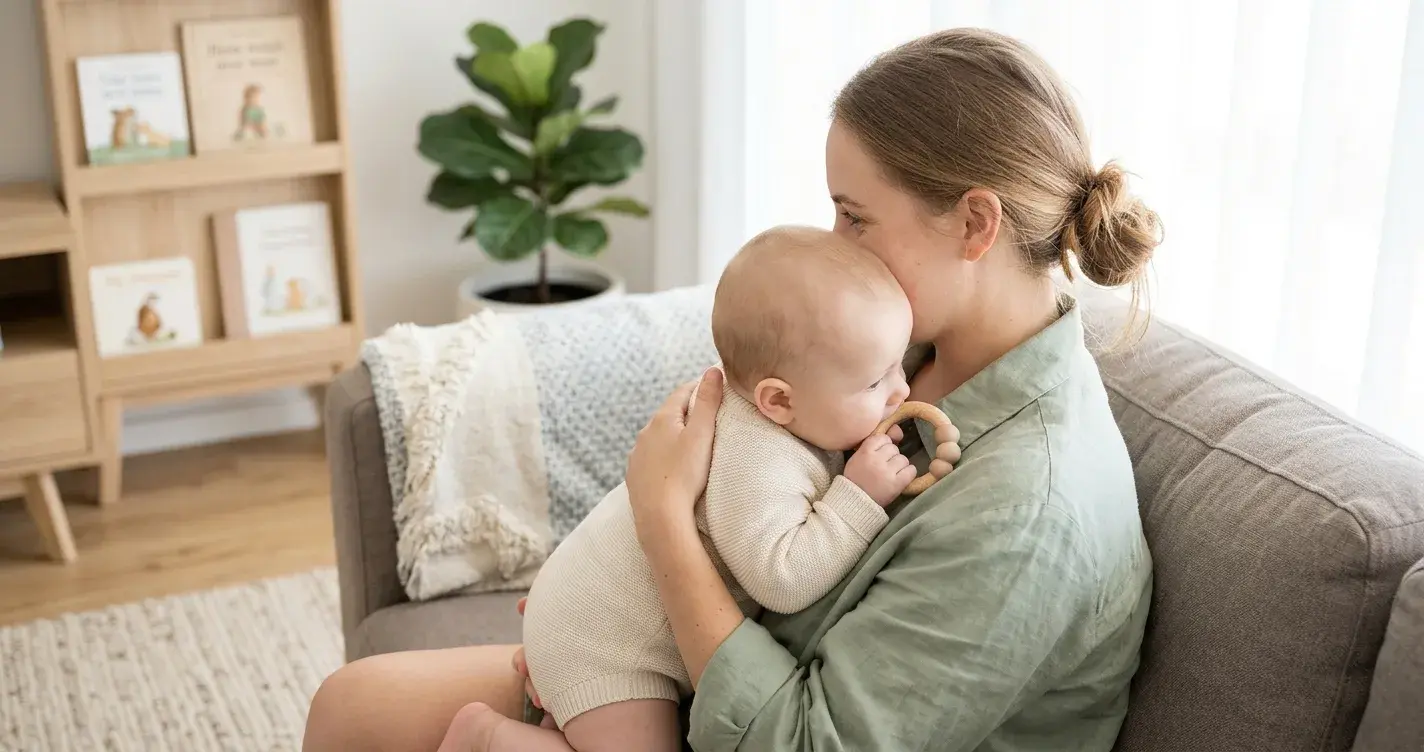
It is one of the most common questions new parents ask us at Eglinton Dental Care: can teething really cause a fever? Your baby is drooling, chewing on everything, a bit unsettled overnight, and then you notice they feel warm. It is natural to join the dots and blame the new tooth. But the honest answer, backed by Australian health guidance, is that teething fever is mostly a myth worth unpacking.
In this post we will look at what teething actually causes, why a true fever usually points to something else, how long teething symptoms normally last, and when it is time to call a GP rather than wait it out.
Does teething actually cause a fever?
This is the big one, and the evidence is pretty clear. According to healthdirect, teething does not cause a fever. The Royal Children's Hospital in Melbourne puts it in a slightly softer way: children who are teething may have a temperature up to 38°C, but a temperature above 38°C is not caused by teething; your child likely has an infection.
So a mild warmth is possible. A genuine fever is not. If your baby's temperature climbs past that 38°C mark, something other than their gums is going on.
Why it seems connected
Part of the confusion comes down to timing. Teething tends to start around the same months that babies lose some of the immunity passed on from mum and start exploring everything with their mouths, which means more germs. It may be a coincidence that your child is teething and has an infection at the same time, as both are very common in young children. Your baby genuinely can be cutting a tooth and fighting off a cold or virus at the very same time. One does not cause the other, but they often turn up together.
What teething can actually cause
Teething is uncomfortable, but its effects are mostly limited to the mouth and gums. You can usually expect:
- Red, swollen or tender gums where the tooth is coming through
- More drooling than usual
- A desire to chew or gnaw on fingers, toys or teething rings
- Some irritability or clinginess, especially in the days around a tooth breaking through
- A slightly warm feeling, without a true fever
What it should not cause is a high temperature, vomiting, diarrhoea, a rash, or your baby seeming genuinely unwell. If any of those show up, it is worth looking past the teeth for the real cause.
Teething fever symptoms versus illness symptoms
It helps to separate out what is "just teething" from what needs a closer look.
Likely teething
Mild gum swelling, drooling, chewing, a bit of grizzling, and perhaps a very slightly raised temperature that settles on its own within a few days.
Likely something else
A temperature of 38°C or higher, your baby seeming floppy, unusually sleepy, refusing fluids, a rash, persistent vomiting or diarrhoea, or crying that you cannot settle with the usual comfort measures.
If you are seeing the second list, it is time to think doctor, not dentist.
Teething fever how long does it last, and what about at night?
Because true fever is not caused by teething, there is no real answer to "how long does teething fever last." Any proper fever has its own timeline linked to whatever infection is behind it, and that could be a day or it could be longer, depending on the cause.
What does follow a pattern is mild teething discomfort. It tends to build in the day or two before a tooth breaks through and settle again once it has come through. Nights can feel worse simply because there are fewer distractions, and parents often notice restlessness more in the dark. If your baby or toddler seems genuinely feverish at night rather than just unsettled, treat it as a fever, not as teething having a bad night.
When to see a GP
If your child is under one month old with a fever, you should take them to a hospital; if your child is under three months old with a fever, see a doctor or health professional. For older babies and toddlers, no matter their age, if they seem very unwell and you are worried, it is best to speak to a doctor.
Seek urgent care at a hospital emergency department straight away if your child has spreading facial swelling, a fever with trouble breathing or swallowing, is very difficult to wake, or has any bleeding that will not stop. These are not things to manage at home or wait on.
For general fever relief, always check the dose for your child's age on the medicine pack, or ask your pharmacist if you are unsure. A dentist can help with sore gums and teeth, but fever itself is a job for a GP, a paediatrician, or in an emergency, a hospital.
How we can help with the dental side of teething
While fever is outside our scope, the teeth themselves are exactly where we can help. At Eglinton Dental Care, families across Eglinton, Alkimos, Butler and the wider northern suburbs bring their little ones in once those first teeth start appearing, so we can keep an eye on healthy development from the start.
We offer children's dentistry for babies, toddlers and older kids, with a calm, unhurried approach. Our team explains each step and goes at your child's pace, and you can ask us to stop at any point if your child needs a break. That is what we mean by modern dentistry with a gentle touch.
If your baby has a fever alongside teething, see your GP first. Once they are feeling better, or if you simply want a check on how their teeth are coming through, you are welcome to choose a time online for a visit.
If you are wondering about the teething timeline itself, including when teeth typically start to appear, you might find it useful to read our related post on when babies start teething, once it is published on our blog.
Frequently asked questions
Is fever a sign of teething?
No. Teething does not cause a fever. A genuine fever, meaning a temperature of 38°C or above, points to an infection or illness rather than a new tooth coming through. It is worth getting any fever checked rather than putting it down to teeth.
Can teething cause a high temperature at night specifically?
Teething itself does not know the difference between day and night, so there is nothing special about a teething temperature at night. If your child feels hot and unwell after dark, treat it the same as you would during the day, and contact a doctor or health professional if you are concerned.
What can I do for a teething baby at home?
Gentle gum rubbing with a clean finger, a firm teething ring, and plenty of comfort and cuddles can all help. For pain relief, always follow the directions on the pack for your child's age, or ask your pharmacist.
Does Eglinton Dental Care bulk-bill children's dental visits?
Eligible children can be bulk-billed under the Medicare Child Dental Benefits Schedule, depending on criteria set by Services Australia. Bring your health fund card to any appointment too, as most private health fund rebates are processed on the spot through HICAPS, with you paying the gap. You can check eligibility details and ask our team any questions on our FAQ page.
When should my child first see a dentist?
Bringing your child in not long after their first teeth appear is a good habit to start. You can read more about our approach to families on our about page, or get in touch if you are not sure when to book that first visit.
Teething is a normal, if tiring, part of your baby's first year, and most of what it causes is mild and manageable at home. A true fever is a different story, and it deserves a GP's attention rather than being put down to new teeth. If you would like your child's teeth checked, or simply want to meet our team before your little one needs anything more involved, call Eglinton Dental Care on 08 9564 1007 or book an appointment online. We are at 1K Imperial Entrance, Eglinton WA 6034, and we would be glad to see your family.